Industry Focus
The jobs you lose are lost on a Saturday, and nobody finds out.
Exterior contractors outgrow their process long before they outgrow their crew. Leads arrive through three channels, estimates live in somebody’s truck, and the claim paperwork runs on whoever happens to be good at it.

The problem
A homeowner calls three contractors. The one who answers first usually wins, and the other two never learn they were in a race. The web form goes one place, the cell phones another, the shared inbox belongs to nobody, and the estimate gets written up from memory that evening. Every handoff between those is somewhere a job can quietly stop moving.
Then the person who is good at insurance claims takes a week off, and the supplement process stalls. Not because it is difficult, but because it was never written down.
None of this is unique to you. It is what happens when a company grows faster than the process that got it here, and the tools get chosen one at a time under pressure rather than fitted to how the work actually moves.
What we fix
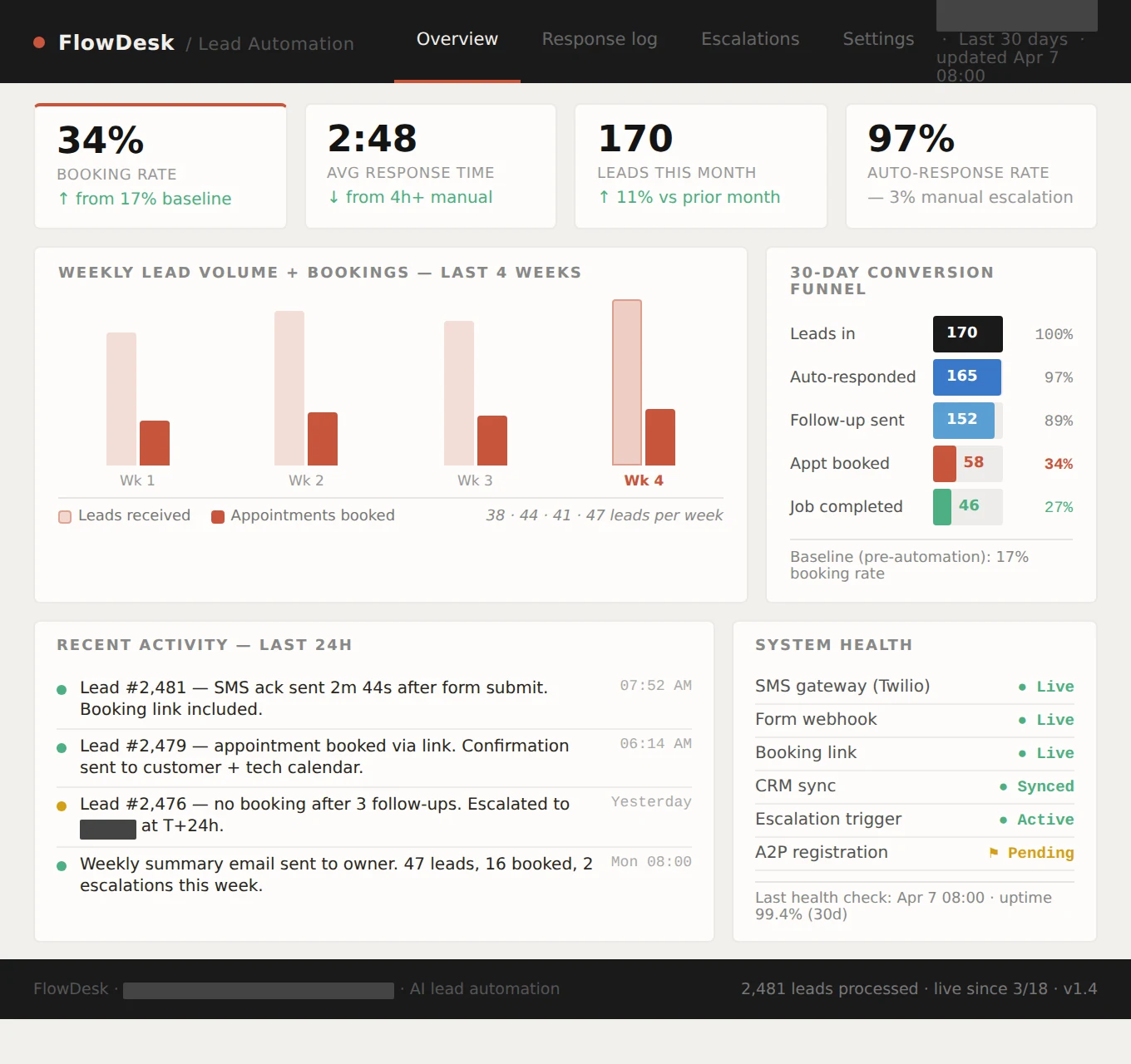
- N.01Put every lead — web form, cell phones, shared inbox, referral — in one place with an owner
- N.02Acknowledge every enquiry within minutes, whether or not anyone is free to work it
- N.03Track estimates as a pipeline with a next date, so nothing waits on someone remembering
- N.04Connect the estimating tool to scheduling and invoicing so nothing gets re-typed
- N.05Write down the claim and supplement process so it does not live in one person’s head
- N.06Surface after-hours and weekend calls instead of letting voicemail decide what matters
What this is not
This is not a new software pitch. Nothing here requires you to leave your estimating platform, add another subscription, or put the crew through training mid-season.
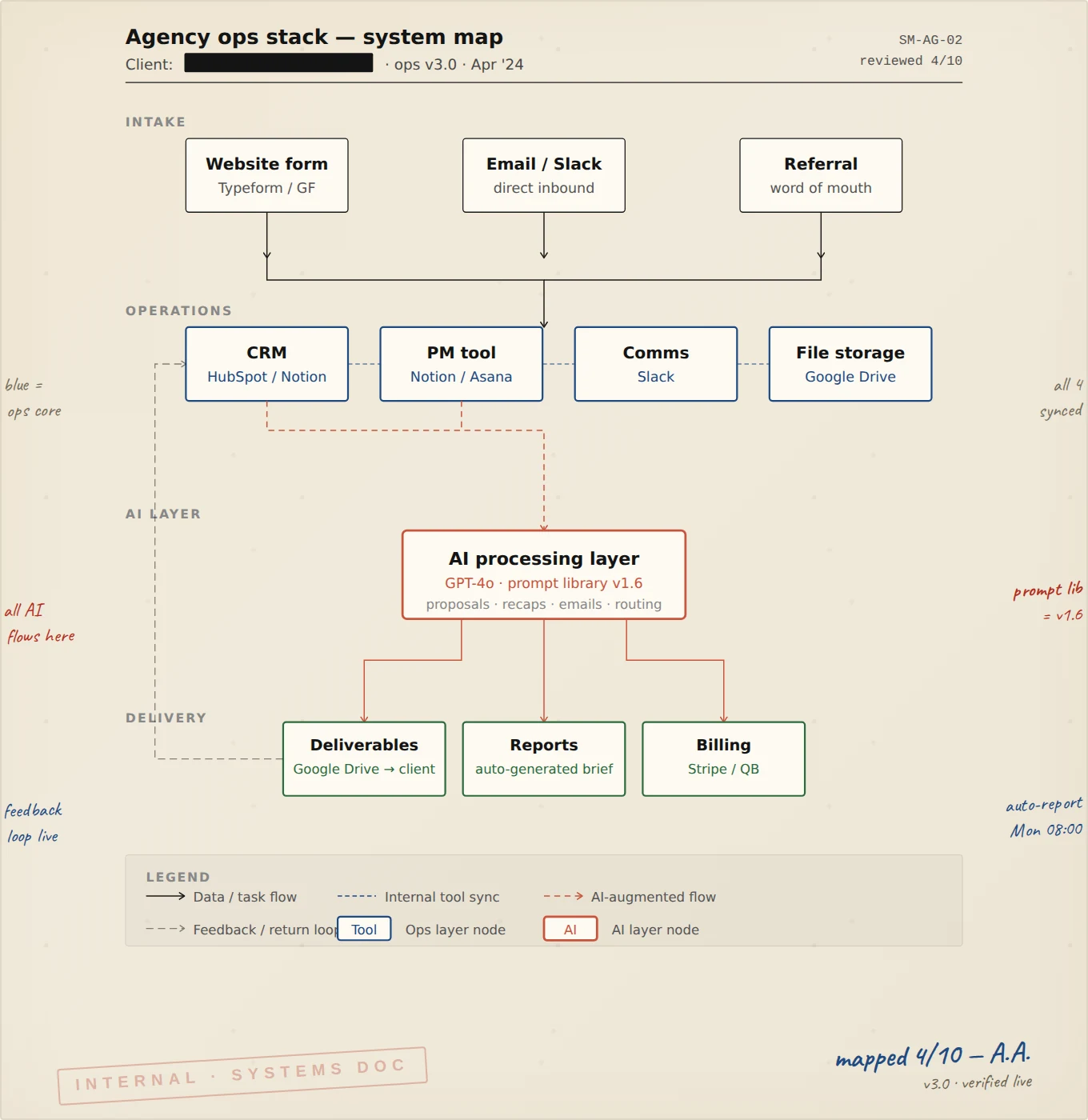
The work starts with what you have. Most of the time the tools in place are sufficient — they just have not been configured to match how the company actually operates. The audit surfaces that gap and produces a written remediation plan. You decide what to implement, in what order, and whether to hire us to do it or hand it to your IT contact.
Start by finding out what a slow week is actually costing you.
The ops scorecard takes about thirty minutes and produces a written report. It maps your current technology stack, identifies gaps and redundancies, and gives you a prioritized list of what to fix first. You keep the report regardless of what happens next.
Take the ops scorecard